
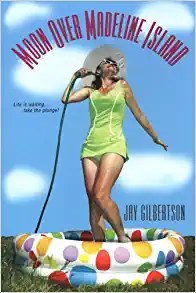
The first book I read this month was “Moon Over Madeline Island” by Jay Gilbertson. I met Jay at a local memoir workshop I attended back in October and November. He complimented my writing style and even kindly read my completed memoir manuscript for me just last month with very sweet feedback. He owned a salon for years where he found the inspiration that led to some of his own writing. I especially enjoyed “MOMI” for its atypical plot; it follows two middle-aged women who are friends embarking on a new business venture. It doesn’t center on romance or their need to find true love, etc.; instead, the friendship is the central focus. The characters are also hugely entertaining, from Ruby, an eclectic but bighearted widow, to Eve, the main character, who randomly decides on a whim to move from the city of Eau Claire (a real city in western Wisconsin, not far from where I live) to Madeline Island, which is a tiny island in Lake Superior at the far north of Wisconsin located not too far from the adorable town of Bayfield (I’ve been to Bayfield for their Applefest, though only to Stockton Island and other Apostle Islands, not to Madeline Island). The women form a small sewing business with others, which leads to a few expected twists and turns in the climax, but I enjoyed even the mellow bits of Eve and Ruby bopping around the island’s gorgeous scenery. I also appreciated seeing places I know in the story, but I think the book would be entertaining to anyone.
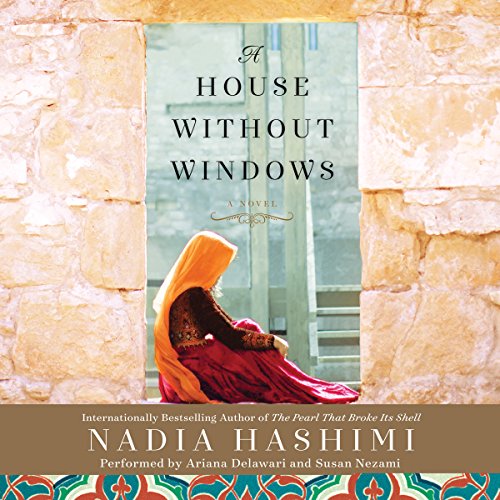
Next, I read “A House Without Windows” by Nadia Hashimi. The story opens with Zeba, a young mother of four, trembling over the dead body of her husband, who has apparently been murdered with a hatchet in the courtyard of their home in rural Afghanistan. Zeba is catatonic and unable to explain what has happened. She is arrested and taken to a women’s prison to await trial, though the people in her husband’s family and her village already assume she will be sentenced to death. The other narrator in the story is Yusef, who was born in Afghanistan, though his family fled the country through Pakistan when he was a child, and he spent most of his life in the US. He is determined to return to his homeland to make a difference as a lawyer and ends up representing Zeba’s case through a human rights organization. At first, he is frustrated with Zeba’s silence, but as he slowly discovers the true story of Kamal’s death, it becomes more complicated to resolve. Yusef realizes that he knows both more and less about his home country than he initially assumed. One of my favorite parts of the story has to do with Zeba’s friends in the prison; there are many women locked up for quite innocent-seeming crimes, like speaking with a man who isn’t their husband or simply trying to escape an abusive marriage, and these women create a beautiful community in the prison where they ironically feel more happy and free than in their outside situations. However, the book also shows the lives of women in Afghan cities who are news reporters and lawyers in their own right. “A House Without Windows” is a very engaging look at a culture that is more complex and evolving than outsiders may initially assume.
Next, I decided it was time for a bit of thought-provoking nonfiction, so I read “Poverty, By America”. I’d read “Evicted”, also by Matthew Desmond, a couple of years ago, and I was intrigued both by his intense investigative style (actually living with people on the verge of eviction) and his content (he wrote much of the story specifically about people in the poorest neighborhoods of Milwaukee, Wisconsin, neighborhoods that I’ve driven through and seen with my own eyes– again, that personal connection resonates with me as a reader). He also has a very direct writing style where he doesn’t waste words; as a college writing instructor always telling my students to avoid wordiness (they rarely do), I appreciate this immensely. Half of this book is footnotes, so the content is only about 150 pages, which made for a quick read. Desmond examines the unique problem of poverty in America; when you consider how ridiculously wealthy our country is, we certainly shouldn’t have people living on the streets or begging for their next meal, though we do. Without getting too political, I’ll try to hit on a few of the main points that intrigued me. He talks about how multibillion dollar American corporations (like Walmart, for instance) are able to use lobbying and existing laws to avoid paying their employees a living wage, and how those employees then live in poverty and use government welfare, essentially supplementing these giant corporations. He shows the impact of our existing tax laws and how those lead to breaks for the richest people in the country, essentially guaranteeing that they pay less in taxes than the middle class. He has a ton of research exposing the problems, which I think would make even the most persistent capitalist realize there are issues with the ideology; however, I also know that many Americans shudder at even the mention of “socialism” and believe that any turn from our existing capitalist system would lead to a rapid spiral in that direction. I think there are many wonderful ways to meet in the middle, such as businesses and the wealthiest 1% simply paying their fair share in taxes, which Desmond outlines quite clearly and succinctly in his book as one of many solutions to ending poverty in our country. I think this would be a fascinating book for a Book Club discussion group. It would also be interesting to compare with any books that examine poverty in other parts of the world as well.

I wrapped up the month with my favorite genre, a little historical fiction. I read “The Secret Life of Violet Grant” by Beatriz Williams. Much more lighthearted than the previous two reads, this one examines a split timeline of two women from an aristocratic New York family: Vivian Schuyler, who, in 1964 is determined to work as a reporter at a magazine, but is essentially delegated to “fact-checker” and “coffee girl”, and Violet Schuyler, who, in 1911, travels to Oxford University to study physics, but finds herself trapped in a loveless marriage to her (much older, and adulterous) professor. Both women broke societal (and family) expectations of the time in attempts to pursue careers they were passionate about, and both hit dead ends. When Vivian receives a mysterious parcel in the mail, originally addressed to Violet Schuyler and post-marked in 1914, their lives are suddenly intertwined, and Vivian decides to investigate the mysterious story of what really happened to her great aunt Violet, a story that nobody else in the family seems able to tell (or willing to share). I found myself enamored with the writing style of Williams– Vivian’s narration is gregariously vivacious, and Violet’s story takes quite an unexpected turn (actually, a few unexpected turns!). This one had me reading late into the night just to find out what would happen next; I’ll be looking for more from this author for sure!
 Words and Coffee Writing
I wouldn’t bet on any capitalist being willing to share their wealth, pay a living wage, or even pay the same percentage of taxes as regular people do, no matter how many facts you throw their way. (K)
LikeLiked by 3 people
I think the author strikes a decent balance of realistic and hopeful; a lot of people share similar views but are told by the government and media that they’re divided. I can understand wanting to form successful businesses, but I can never understand hurting others to do so.
LikeLiked by 3 people
Everything is geared to profit now. When businesses were smaller, they were integrated into the community I think and less likely to destroy or exploit it. Big business is a completely different story.
LikeLiked by 2 people
Nice reading list! This post just made me realize I didn’t read any book this May omg!
LikeLiked by 2 people
Thanks! Maybe June will be your month for more reading 😀
LikeLiked by 1 person
Great reviews. These look very interesting.
LikeLiked by 1 person
Thank you!
LikeLiked by 1 person
Pretty good collection
LikeLiked by 2 people
Thanks!
LikeLiked by 1 person