
This post is a bit later than I’d planned, but I did manage to fit just two books into my September plans along with everything else. Both were apparently Reese’s Book Club picks (I don’t usually choose books based on awards, “book club” tags, etc., but it just kind of happened this way in September). They both also had other similarities, too, that I’ll get into a bit.
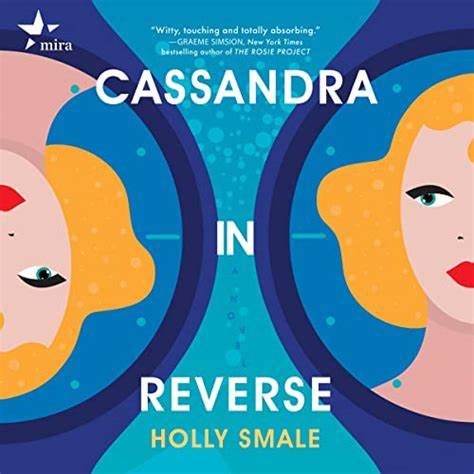
“Cassandra in Reverse” by Holly Smale sounded like a fascinating concept: a woman who is going through a rough patch suddenly develops the ability to time travel (at least within the span of a few weeks) and uses it to try to improve her life’s trajectory. Cassandra is a difficult character to like; she is very set in her ways and seems determined to push people away. She has a lot of difficulty navigating social situations and, as I read, I was reminded quite a bit of Eleanor Oliphant is Completely Fine, which I read in July (Eleanor is also a British thirty-ish woman, has a traumatic past, and has difficulty in social situations, sans magical time traveling ability.) I didn’t feel very invested in the book until about 2/3 of the way through, where we’re introduced to a long-lost family member and the story picks up the pace. Cassandra’s character also starts to become more likeable at this point and less prone to avoidance. I did really enjoy the last part of the book.
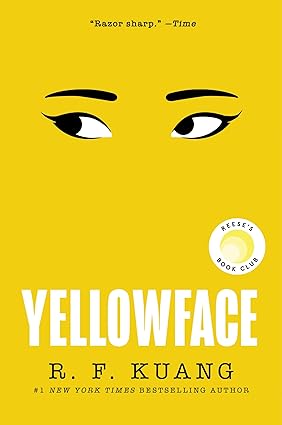
“Yellowface” by R. F. Kuang was another book with an intriguing concept: an unsuccessful author steals a manuscript from a friend and publishes it as her own when that friend dies. Chaos ensues. This book has a lot of fascinating commentary on the world of publishing, which initially drew me in (I’d first heard about it on Lucia’s Fiction blog, which is when I added it to my TBR list). The author also has a lot to say about race in the world of publishing, which is maybe obvious in the title: the successful author (Athena) who dies was Chinese and the book thief (June) is white, though she is encouraged by her publicity team to change her name and to look and seem more “ethnic” when the book debuts. I wanted to like this book more, but the pacing is quite slow. There are many rants by the main character, June, blaming everyone for her own poor choices and initial bad luck in the publishing realm. She is a very unlikeable character, and I could have done with a lot less of her in the book (although perhaps that’s the point) or maybe just a short story version of this book.
My conclusion about the Reese’s Book Club, after these two picks, is that it includes books with awesome concepts but difficult characters and a slow pace. I’m sure I’ve read others from that list, so I might go back and see if this is an actual pattern. I have a stack of books on my nightstand that I’m working on for this month, none of which are a part of any book club as far as I know. 😀
 Words and Coffee Writing
The first one seems more of a fiction, but theme of second is somewhat known as few stories in the Bollywood film industry pertaining to screenplay etc are already in the public domain. Nice, that you still have a passion and time for reading. Thanks.
LikeLiked by 1 person
Thanks! That’s interesting; are you saying the second one sounds like it’s based on a Bollywood film? It wouldn’t surprise me. Bollywood is prolific!
LikeLiked by 1 person
Oh wow you read yellowface! I agree with your points! It had insights on publishing, which I appreciated, but it wasn’t my most liked book. I’ve also heard about Cassandra reviewed above – awesome review!
LikeLiked by 1 person
Thank you! Yes, I took your recommendation– I am glad I read “Yellowface”; even if it wasn’t one of my favorites, I think it brings up some interesting talking points in publishing.
LikeLiked by 1 person
I loved Eleanor Oliphant Is Doing Fine, but will skip these two. Thanks for the warning!
LikeLiked by 1 person
I did enjoy both of these to an extent, to be fair; I just didn’t connect well with the characters. Cassandra does grow on the reader eventually, but June was just a frustrating character to follow throughout.
LikeLike
So many books anymore are just problem after problem after problem with few letups. I’m turning into my mother. I just can’t stand it anymore!
LikeLiked by 1 person
There are some that feel that way, but there are still many good ones out there 😊 I think there are just so many books these days that it’s tough to pick what I want to read.
LikeLike
I once heard a radio interview with Smale. After writing the Geek Girl series, an organisation that advocates for autistics apparently got in touch with her to point out that Harriet Manners was written as autistic. I wonder whether Smale is writing autistic characters, and the same applies to Cassandra as it’s commonly thought of as a social communication disorder and some of the traits you describe in her character sound like this.
LikeLiked by 1 person
This may be the case as there was an author’s note at the end about her own diagnosis of autism. I really liked that she was writing for a group that she identifies with, as that is something that I’m very passionate about for my characters who are young adult cancer patients/survivors like myself. I could identify some of the traits as they’re ones I’ve seen in students I’ve worked with, and I’m glad that I read the book because I think it taught me more about what it might be like to be in the headspace of a person with autism.
LikeLiked by 1 person
I just finished The Domino Men by Jonathan Barnes. Not stellar writing and it was slow getting into it. But at about the halfway mark it took off like a rocket!
LikeLiked by 1 person
Nice! Yeah, the slow starts aren’t necessarily a bad thing as long as they can hook me in. I felt invested for both books. 🙂
LikeLike